
Road Marking Services
Road Marking Services in India for Highways, City Roads, Industrial Roads, and Plant Premises
Road markings do more than define lanes. They improve traffic discipline, reduce confusion at junctions, and make roads safer for drivers and pedestrians. On busy stretches, faded lines quickly turn into wrong-lane driving, risky overtakes, missed turns, and near-misses, especially at curves, merges, crossings, and work zones.
At Bitu Way & Infrastructure LLP, we provide road marking services in India with a practical focus on visibility, durability, and execution accuracy. Whether you need thermoplastic road marking, reflective road markings with glass beads, repainting of worn lines, or marking layouts for a new stretch, we support your project with on-ground planning, clean application, and maintenance guidance aligned to common Indian road marking references like IRC:35 and MoRTH marking specifications.
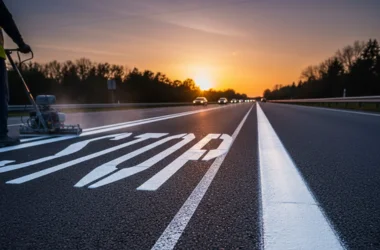
Why Road Markings Matter in Indian Traffic Conditions
Indian roads carry mixed traffic. A single stretch may see trucks, buses, cars, two-wheelers, tractors, and pedestrians moving together. When markings are unclear, the road loses “guidance”, and the risk increases.
Common problems we help solve through road line marking services:
- Lane discipline breaks down on wide or multi-lane roads where the centre line and lane lines are faded.
- Junction confusion increases when stop lines, arrows, and channelising markings are missing.
- Night-time visibility reduces when reflective performance is poor, particularly in rain, glare, and fog-prone months.
- Work zones become risky when drivers do not get early, clear guidance through temporary diversions and merges.
- Industrial and plant roads face internal incidents when vehicle routes, loading areas, and pedestrian paths are not clearly marked.
Many road projects in India reference marking guidance through IRC:35 and materials through MoRTH specifications, so doing this properly is not only about appearance, it is about function and compliance readiness.
Where Our Road Marking Services Are Used
We work across typical Indian road and facility environments:
Highways and Major Corridors
- lane lines, edge lines, centre lines
- chevrons, hatching, hazard markings
- ramps, merges, and channelising markings
City Roads and Municipal Stretches
- zebra crossings and stop lines
- junction arrows, lane drops, turn lanes
- school zone and pedestrian priority markings (as required)
Industrial Roads, Plant Premises, and Logistics Yards
- internal traffic routing and one-way flow markings
- pedestrian safety lanes and restricted zones
- loading bay guidance and warehouse approach lanes
Parking Areas and Commercial Premises
- parking bay marking, arrows, and pedestrian paths
- entry and exit guidance, no-parking zones
Work Zones and Diversion Routes
- temporary guidance and safety control markings
- repainting and refresh cycles for high-wear zones
Road Marking Standards and Specification Alignment
We design marking layouts and select materials based on the road type, movement pattern, and visibility need. Where required by project scope, we align with commonly referenced Indian guidance such as:
- IRC:35 for code of practice and marking usage principles.
- MoRTH marking specifications (Clause 803 and related guidance) for material expectations used across road works.
- Marking guideline circulars used in the Indian context for consistent road marking practice.
We do not treat standards as paperwork. We use them to make markings predictable, readable, and consistent across the stretch.
Our Road Marking Services
1) Road Marking Layout Planning and Setting-Out
Good markings start with correct layout. Before application, we support:
- site review of junction behaviour, turning paths, conflict points, and pedestrian movement
- marking layout plan for lane lines, stop lines, crossings, arrows, and channelising zones
- measurement and setting-out so markings land where guidance is actually needed
- coordination with other road safety elements like signage and delineators (where applicable)
This is especially important on plant premises and industrial roads, where internal routing must be clean, simple, and safe.
2) New Road Markings (Fresh Application)
We execute new markings on:
- newly constructed roads
- resurfaced roads (DBM/BC layers)
- industrial roads and commercial premises
Typical deliverables include:
- lane lines, centre lines, edge lines
- directional arrows, turn lanes, merge guidance
- zebra crossings, stop lines, give-way markings
- hazard markings like chevrons and hatching
- parking and yard markings
3) Re-Marking and Refurbishment (Repainting and Renewal)
Markings fade fastest where braking and turning are frequent. We support:
- repainting worn segments
- touch-ups for junction mouths, crossings, curves, bus stops, toll approaches
- correction of confusing or misaligned markings where required
- planned refresh cycles, so repainting is predictable, not emergency-driven
4) Industrial and Parking Markings
For plant premises, warehouses, and logistics yards, we provide:
- lane routing, arrows, and flow guidance
- pedestrian lanes and crossing zones
- loading and docking bay markings
- restricted areas and hazard zones
This reduces internal confusion and improves movement discipline for drivers and operators.
Materials and Methods We Use
Material selection depends on traffic volume, surface type, weather exposure, and how long the marking must stay functional before maintenance.
Thermoplastic Road Marking
Thermoplastic road marking is commonly used on highways and high-traffic stretches because it offers strong visibility and durability when applied correctly.
Where it fits well:
- highways, major city corridors
- frequent movement industrial roads
- junctions and crossings where wear is high
Paint-Based Road Markings
Paint-based markings are used where suitable, depending on the site environment and project requirement. These are often preferred for:
- certain internal roads and plant areas
- parking zones and commercial premises
- temporary markings or short-cycle refresh requirements
Reflective Road Markings with Glass Beads
Night-time guidance improves when markings reflect vehicle headlights back towards the driver. For that, reflective road markings use glass beads to improve retroreflectivity, especially useful on:
- highways, curves, merges, and junction approaches
- crossings and stop lines where driver reaction timing matters
- work zones where night visibility is critical
We recommend reflectivity based on the road’s night-time risk profile and movement pattern.
Marking Types We Commonly Provide
To keep the page search-friendly and clear for buyers, here are the most common marking categories we support:
- Longitudinal markings: lane lines, centre lines, edge lines
- Transverse markings: stop lines, zebra crossings
- Directional markings: arrows, lane drop markings, turning guidance
- Hazard and channelising markings: chevrons, hatching, islands
- Industrial and yard markings: bays, pedestrian lanes, restricted zones
For many projects, colour and marking selection are guided by IRC and MoRTH references used across Indian road works.
Execution Quality, Safety, and Handover
Road marking is judged by how it performs after traffic hits it, not by how it looks on day one. Our execution approach includes:
- surface readiness checks before marking
- clean setting-out and crisp line edges
- thickness and uniformity checks as per project method statement
- glass bead application control for reflective markings (where required)
- work zone coordination and traffic management planning during execution
- handover support with completion photos and basic maintenance guidance
Road Marking Maintenance That Reduces Repeat Costs
Many sites repaint too late. By the time people notice markings are faded, safety risk has already increased.
We help you plan maintenance realistically:
- junctions, crossings, and braking zones need more frequent checks
- curves and merges wear faster than straight sections
- repainting should be scheduled based on wear and traffic intensity, not only on calendar dates
A simple inspection routine helps preserve visibility, improve discipline, and reduce the cost of frequent emergency repainting.
Why Choose Bitu Way & Infrastructure LLP
- Designed for real Indian movement patterns: we plan markings around how vehicles actually move, not ideal assumptions.
- Execution-focused service: correct setting-out, clean application, and practical work-zone coordination.
- Material selection that fits the stretch: thermoplastic, paint-based, and reflective marking guidance based on traffic and use-case.
- Maintenance-first thinking: we help you keep markings functional, not just freshly applied.
FAQs About Our Road Marking Services in India
What is thermoplastic road marking, and where is it used?
Thermoplastic road marking is widely used on highways and high-traffic corridors because it is durable and offers strong visibility when applied correctly.
How do reflective road markings work?
Reflective road markings use glass beads to bounce vehicle headlight beams back towards the driver, improving night-time guidance and visibility in low-light conditions.
How often should road markings be repainted?
It depends on traffic intensity and wear zones. Junctions, crossings, and braking areas typically need refresh sooner than straight sections. A maintenance plan based on inspection works best.
Do you provide road marking services for plant premises and parking areas?
Yes. We support internal traffic routing, pedestrian lanes, loading zones, bay markings, and safety zones for industrial roads and commercial premises.
Do you support re-marking and maintenance planning after completion?
Yes. We can plan refresh cycles and prioritise high-wear locations so markings remain functional longer.
Get Road Markings That Stay Visible on Busy Indian Roads
Share your road type, stretch length, and key junctions or crossings. Our team will suggest the right marking layout and execution plan for clear visibility and fewer reworks.