
Microsurfacing & All Maintenances
Microsurfacing and Road Maintenance Services in India for Highways, City Roads, Industrial Roads, and Haul Routes
Roads rarely fail overnight. In most cases, the warning signs show up early: surface raveling, polished patches that reduce grip, fine cracks that start holding water, edge breaks near shoulders, or potholes that keep returning in the same locations. When these issues are ignored, repairs become repetitive, downtime increases, and the total cost of ownership rises.
At Bitu Way & Infrastructure LLP, we deliver microsurfacing and all types of road maintenance services in India with one clear goal: extend pavement life through planned, practical interventions. We support highways, city roads, industrial roads, plant premises, and heavy-movement haul routes with preventive and corrective maintenance, including microsurfacing where it is technically suitable and cost-effective.
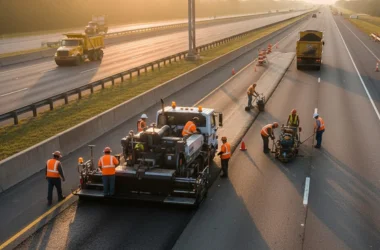
Why Road Maintenance Should Start Before Visible Failure
If you wait until a road “looks bad”, the repair options often become heavier, costlier, and more disruptive. Preventive maintenance is meant to slow deterioration and protect the asset before structural distress spreads, which is a core approach described in highway maintenance frameworks.
Typical problems we address through timely maintenance:
- Potholes and patch failures caused by water ingress, weak edges, and traffic impact
- Aggregate loss and raveling that gradually turns a surface into dust and loose material
- Loss of skid resistance at junctions, curves, braking zones, and industrial turning points
- Crack growth that allows moisture into the layers and accelerates damage
- Shoulder and edge breaks that reduce road width and create safety risk
A structured maintenance plan helps you reduce emergency repairs and shift more work into predictable, planned windows.
Where Microsurfacing and Road Maintenance Are Used
Our work typically supports:
- National and state highways: renewal-course treatments, skid and texture restoration, planned maintenance
- City roads and municipal corridors: surface correction, safer crossings and junction approaches, quick reopening needs
- Industrial roads and plant premises: predictable maintenance windows for heavy loads and frequent turning
- Haul routes and heavy-movement stretches: high wear zones where surface protection prevents faster deterioration
- Parking areas, logistics yards, toll approaches: braking and turning zones that polish and wear quickly
What Is Microsurfacing
Microsurfacing is a surface maintenance treatment used when the pavement is structurally sound, but the surface performance is declining due to ageing, aggregate loss, polishing, minor cracking, or similar surface defects. MoRTH’s circular on microsurfacing discusses it as a renewal-course and maintenance option and points to MoRTH Section 514 and IRC:SP:81 for guidance.
What microsurfacing is typically used for
Microsurfacing is commonly considered to:
- improve surface texture and skid resistance
- seal fine surface cracks and reduce water entry
- correct minor surface irregularities and wear-related defects
- provide a renewed, uniform surface where the base is still serviceable
MoRTH describes its use where structurally sound pavements show signs like premature ageing, aggregate loss, cracking, and polishing.
When microsurfacing is not the right choice
This is important for credibility and for preventing the wrong scope on the wrong road:
- deep structural cracking or alligator cracking indicating base failure
- severe potholing patterns that suggest deeper layer distress
- unresolved drainage problems where water remains trapped
- structural rutting beyond surface correction
MoRTH references microsurfacing as a renewal and maintenance treatment, which assumes the pavement is otherwise structurally serviceable.
Our Microsurfacing Service Scope
1) Road Condition Review and Suitability Assessment
Before recommending microsurfacing (or any renewal treatment), we review:
- distress type and distribution (raveling, cracking, polishing, rutting, edge breaks)
- drainage condition and water movement behaviour
- traffic volume, axle load, turning points, and braking zones
- maintenance objectives: skid, texture, sealing, ride improvement, life extension
This aligns with the broader maintenance approach where condition assessment supports the right treatment selection.
2) Pre-Repair Works Before Microsurfacing
Microsurfacing works best when the road is prepared correctly. We typically plan pre-works such as:
- pothole repair and local patching
- crack sealing where needed
- edge break repair and shoulder corrections
- cleaning and preparation to ensure uniform application
IRC:SP:81 focuses on microsurfacing and slurry seal as maintenance treatments and includes performance-related checks like set time, which reinforces the need for disciplined preparation and execution.
3) Execution Planning and Traffic Management
We plan sequencing based on:
- lane-wise or stretch-wise execution
- movement windows (day or night constraints)
- safe traffic flow and work zone control
- reopening plan based on site conditions
4) Application Support and Finish Quality Focus
During execution, our practical focus is:
- uniform coverage and clean edges
- controlled spread and consistent finish
- quick snag clearance so the treated stretch performs as intended
All Types of Road Maintenance Services We Provide
Microsurfacing is one part of road maintenance. Many roads need a combination of targeted repairs and surface treatments. Our maintenance scope typically includes:
Pothole Repair and Patch Repair
- emergency pothole repair for safety and continuity
- planned patching where failures repeat in the same location
- reinstatement approach aimed at reducing early patch break-up
Crack Sealing and Joint Treatment
Cracks are often the “entry point” for water. Early sealing helps slow deterioration and reduces the chance of potholes forming after rain or heavy traffic cycles.
Edge Break Repair and Shoulder Maintenance
Edge failure is common where shoulders are weak or drainage is poor. We repair edge breaks and support shoulder corrections so the pavement edge stops collapsing under load.
Rut Correction and Levelling Works
Where suitable, we support local levelling and correction of depressions to restore smoother movement and reduce water stagnation in wheel paths.
Drainage Cleaning and Water Management
No surface treatment performs well if water is not exiting properly. Drainage cleaning, outlet clearing, and restoring side drain flow often becomes the most valuable maintenance work on recurring-failure stretches.
Surface Renewal and Resurfacing Recommendations
When the road needs more than maintenance treatment, we guide the decision based on condition and objective. Microsurfacing is not positioned as a replacement for strengthening where strengthening is required. MoRTH’s microsurfacing note frames it as a renewal and maintenance option, which helps guide correct usage.
How We Decide the Right Treatment for Your Road
This is the decision framework we use on ground:
- Is the problem surface-level or structural?
- Where is the distress concentrated? Junctions, wheel paths, edges, drains, plant gates
- What is the traffic intensity and axle load?
- What is the drainage reality?
- How much downtime is acceptable?
- What is the objective? Skid, sealing, ride, safety, life extension
This approach matches how highway maintenance manuals describe preventive and corrective maintenance planning around condition and functional needs.
Our Execution Process
- Requirement call and basic inputs (road type, length, problems, movement pattern)
- Site inspection and distress mapping
- Scope recommendation (repairs, drainage actions, renewal treatment suitability)
- Pre-repair sequence (patching, sealing, edge work, drainage)
- Microsurfacing execution if selected
- Post-work checks and snag clearance
- Maintenance guidance with inspection triggers
Why Choose Bitu Way & Infrastructure LLP
- Maintenance that prevents repeat repairs: We prioritise the root cause first (drainage, edge failures, recurring pothole zones) so your road does not fall back into the same repair cycle.
- Right treatment, not one default solution: We recommend microsurfacing only when the pavement is structurally sound and it fits the objective. If the road needs stronger corrective work, we tell you clearly.
- Execution built around traffic and downtime limits: Our planning considers movement patterns, work windows, and safe sequencing so maintenance work is practical on highways, city roads, plant premises, and haul routes.
- Project-aligned support from planning to handover: From condition review and BOQ-ready scope to on-ground execution guidance and maintenance triggers, we help you keep the stretch functional for longer.
FAQs About Our Microsurfacing and Road Maintenance in India
What is microsurfacing used for in road maintenance?
It is used as a renewal and maintenance treatment when the pavement is structurally sound but the surface is ageing, polishing, losing texture, or showing minor defects. MoRTH has issued guidance on using microsurfacing for renewal-course and maintenance on National Highways and references MoRTH Section 514 and IRC:SP:81.
What is the difference between slurry seal and microsurfacing?
IRC:SP:81 covers tentative specifications for both slurry seal and microsurfacing as maintenance treatments, with performance checks like set time and related requirements. The correct choice depends on road condition and the performance objective.
Should potholes and cracks be repaired before microsurfacing?
Yes. Pre-repair work like pothole patching and crack treatment is typically planned so the surface treatment performs uniformly and does not get undermined by existing defects.
How do you decide if a road needs microsurfacing or a stronger solution?
We evaluate whether distress is surface-level or structural, and whether drainage and base condition support a maintenance treatment. Microsurfacing is positioned as a renewal and maintenance option, not a cure for structural failure.
Get a Practical Microsurfacing and Road Maintenance Plan for Your Stretch
Share your road type, approximate length, key problem areas, and traffic movement pattern. Our team will recommend the right maintenance sequence, including whether microsurfacing is suitable, with a scope designed to reduce repeat repairs and downtime.